
miraDry as a Treatment Option for Underarm Sweating
A compassionate, practical guide to miraDry for underarm hyperhidrosis. The article explains what miraDry is, how it works, who it may help, what treatment can feel like, realistic results, possible side effects, limitations, cost considerations, and questions to ask before deciding whether it is right for you.

Botox as a Treatment for Hyperhidrosis
A compassionate, practical guide to Botox for hyperhidrosis, including how it works, who it may help, what treatment feels like, what to expect afterward, possible side effects, and questions to ask before deciding whether it is right for you.

Do I Have Hyperhidrosis?
A compassionate guide to help readers understand whether their sweating may be hyperhidrosis rather than regular sweating. The article explains what hyperhidrosis can look and feel like, how it differs from normal sweating, when it may be primary or secondary hyperhidrosis, and when to talk with a healthcare professional.

Challenges in Writing and Test Taking With Sweaty Hands
A compassionate, practical article for students who struggle with sweaty hands while writing, taking notes, filling out worksheets, or sitting for exams. It explains why the problem is real, how it can affect school performance and confidence, and what small strategies, accommodations, and treatment conversations may help.

Dry Air, Humid Air, and Hyperhidrosis: Finding a Climate That Works With You
Climate does not cause primary hyperhidrosis, but it can change how manageable sweating feels day to day. Humid places can make sweat linger, clothing feel damp, and heat feel heavier. Dry climates may help sweat evaporate faster and reduce that sticky “trapped” feeling, but they can also create winter problems like cracked hands, irritated skin, and extra dryness from iontophoresis. This guide walks through the trade-offs, practical routines, and U.S. cities that may feel easier for some people with hyperhidrosis.

ETS Surgery for Hyperhidrosis: A Careful Guide to the Last-Resort Option
ETS surgery can dramatically reduce severe hand sweating for some people, but it is not a casual next step after antiperspirants. It interrupts part of the sympathetic nerve pathway and can cause long-lasting or irreversible side effects, especially compensatory sweating on other parts of the body. This guide explains where ETS fits today, why it is usually considered only after other treatments have failed, what risks to understand, and what questions to ask before making a decision.

Glycopyrrolate for Hyperhidrosis: Benefits, Side Effects, and What to Know Before Starting
Glycopyrrolate is an anticholinergic medication that can reduce sweating by blocking acetylcholine signals to sweat glands. For hyperhidrosis, oral glycopyrrolate is commonly used off-label, while topical glycopyrronium cloths such as Qbrexza are FDA-labeled for primary underarm hyperhidrosis in people age 9 and older. It can be very helpful, especially for multi-area, facial/scalp, situational, or treatment-resistant sweating, but it needs careful use because side effects like dry mouth, constipation, blurred vision, urinary retention, and overheating can matter in real life.

The Bathroom Reset is a Strategy, Not a Failure
A confidence piece about stepping away for a minute, checking what you need, and returning without treating the reset like evidence that you ruined the night.

Letting People Be Kind Without Interrogating It
For the moment someone responds better than expected: accepting normal care, resisting the apology spiral, and letting the conversation keep moving.
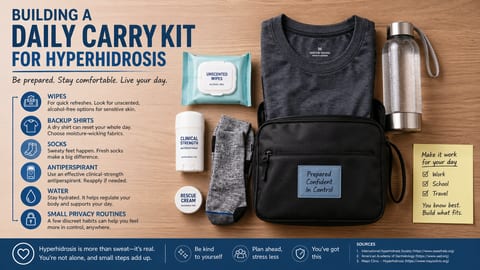
Building a daily carry kit for hyperhidrosis
A practical checklist for wipes, backup shirts, socks, antiperspirant, water, and small privacy routines, with room for what actually fits your day.