Wondering If Your Sweating Is More Than Normal?
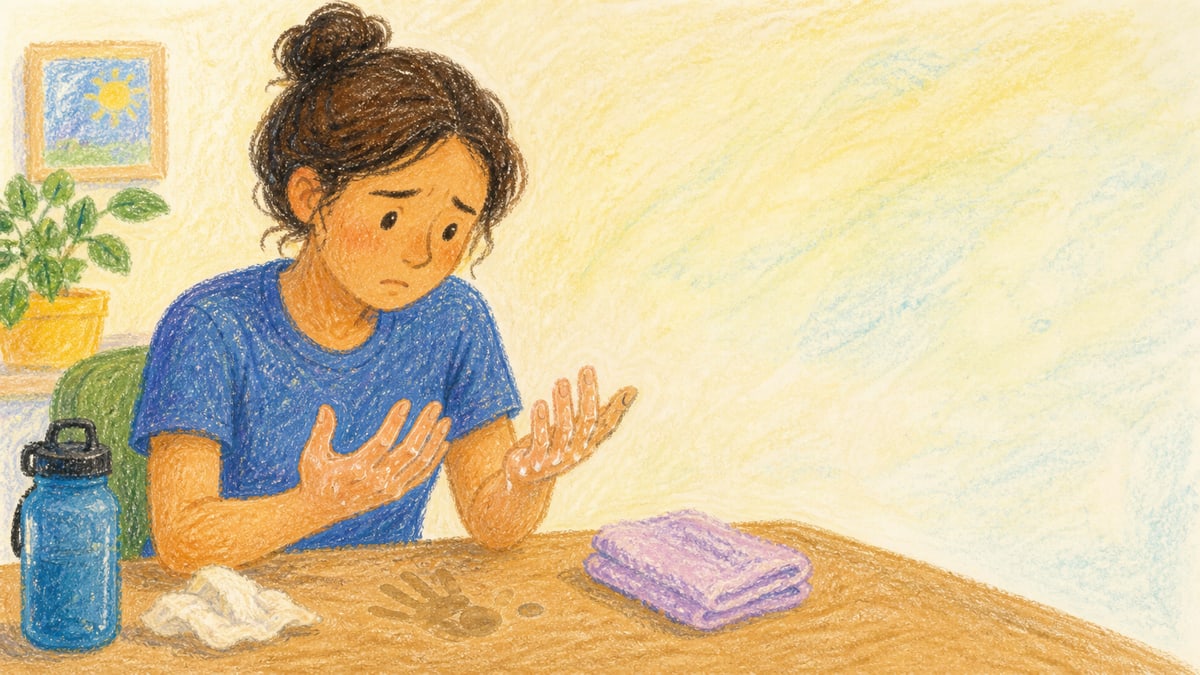
If you are asking yourself, “Do I have hyperhidrosis?” there is a good chance your sweating has already started to feel like more than a small inconvenience. Maybe your hands get wet when you are not hot. Maybe your shirts show sweat marks even when you are sitting still. Maybe your feet slide around in your shoes, or your face starts sweating at times when everyone else seems completely dry.
I know how confusing that can feel. You may wonder if you are overreacting, if everyone secretly deals with this, or if you are just more nervous than other people. It can be hard to tell the difference between normal sweating and something medical, especially when people casually say things like, “Everyone sweats.”
Everyone does sweat. But not everyone sweats in a way that regularly interrupts writing, working, shaking hands, wearing certain clothes, using a phone, taking tests, or feeling comfortable around other people.
Hyperhidrosis is a medical condition that causes excessive sweating beyond what the body needs to cool itself. It may happen even when you are cool, resting, or sitting in a comfortable room.1 This article cannot diagnose you, but it can help you understand what hyperhidrosis often looks and feels like so you can decide whether it may be time to ask for help.
What Regular Sweating Usually Looks Like
Sweating is normal and necessary. It helps your body cool down when you are hot, exercising, anxious, stressed, embarrassed, angry, or sick with a fever.2
Regular sweating usually makes sense when you look at the situation. For example, you might sweat after walking outside on a hot day, during a workout, before a big presentation, while eating spicy food, or when you are wearing heavy clothing.
Regular sweating often has a clear reason, such as:
- Hot weather
- Exercise or physical activity
- Stress, anxiety, fear, or nervousness
- Fever or illness
- Spicy foods or certain drinks
- Warm rooms or heavy clothing
With regular sweating, the amount of sweat usually feels connected to what is happening. You may feel damp, but the sweating tends to settle down when you cool off, rest, change clothes, calm down, or leave the triggering situation.
What Hyperhidrosis Can Look and Feel Like
Hyperhidrosis can feel different because the sweating may seem out of proportion to the moment. You may sweat when your body does not need cooling. You may be sitting still, in a cool room, doing nothing physically demanding, and still feel sweat building up.
The American Academy of Dermatology explains that people with hyperhidrosis may sweat even when it is cool or when they are sitting at a desk.1 Mayo Clinic describes hyperhidrosis as sweating that is not always related to heat or exercise and may soak through clothing or drip from the hands.3
Hyperhidrosis may feel like:
- Your palms become wet even when you are not nervous or hot.
- You leave damp marks on paper, desks, keyboards, phones, or clothing.
- Your underarms soak through shirts quickly or repeatedly.
- Your feet feel wet inside your socks or shoes.
- Sweat beads up or drips in a way that feels hard to control.
- You need to wipe, change clothes, change socks, or check yourself often.
- You avoid handshakes, hugs, certain fabrics, sandals, presentations, or social situations.
- You plan your day around hiding sweat or preventing people from noticing.
One of the clearest signs is not just the amount of sweat, but the way it interferes with life. Hyperhidrosis can make everyday tasks harder, including writing, using a computer, turning a doorknob, raising your hand, or sitting near other people.4
Regular Sweating vs. Possible Hyperhidrosis
The line between “normal sweat” and “this might be hyperhidrosis” is not always perfectly obvious. This table can help you compare the two in a practical way.
| Question | Regular Sweating | Possible Hyperhidrosis |
|---|---|---|
| Does it happen mostly when you are hot or active? | Usually, yes. | It may happen even when you are cool, resting, or sitting still. |
| Does the amount of sweat match the situation? | Usually feels reasonable for the heat, activity, or stress. | Often feels excessive or hard to explain. |
| Does it affect daily tasks? | Usually only occasionally. | May regularly interfere with writing, clothing, phones, shoes, work, school, or social situations. |
| Where does it happen? | Can happen anywhere depending on heat or activity. | Primary hyperhidrosis often affects specific areas such as palms, soles, underarms, face, or scalp. |
| Does it stop when you cool down? | Usually improves when the trigger passes. | May continue or return often, even without a clear trigger. |
| Does it happen during sleep? | May happen with heat, fever, illness, or certain conditions. | Primary hyperhidrosis usually decreases or stops during sleep; night sweats may suggest another cause and should be discussed with a clinician. |
Common Areas Affected by Hyperhidrosis
Hyperhidrosis can affect one area, several areas, or most of the body. Primary focal hyperhidrosis most often affects specific areas, especially the underarms, palms, soles, scalp, and face.4
Hands or palms
Palmar hyperhidrosis can make your hands feel wet, cold, slippery, or difficult to use. You may notice trouble holding pens, using touchscreens, opening containers, shaking hands, or keeping paper dry.
Underarms
Axillary hyperhidrosis can cause visible sweat marks, repeated shirt changes, odor worries, and avoidance of certain colors or fabrics. You may feel like you are constantly checking your shirt.
Feet or soles
Plantar hyperhidrosis can make socks feel soaked, shoes feel slippery, or feet more prone to odor, irritation, cracking, or peeling. Cleveland Clinic notes that hyperhidrosis may contribute to cracked or peeling skin on the feet over time.5
Face, scalp, or head
Craniofacial sweating can feel especially visible because it is hard to hide. You may sweat from your forehead, upper lip, cheeks, scalp, or hairline during conversations, meals, warm rooms, or stressful moments.
Most of the body
Heavy sweating over most of the body can happen with secondary hyperhidrosis, which may be related to a medication or another medical condition.6 This is worth discussing with a healthcare professional, especially if it is new, worsening, or happening at night.
Primary vs. Secondary Hyperhidrosis
Hyperhidrosis is usually described as either primary or secondary. Knowing the difference can help you understand what a doctor may ask about.
Primary focal hyperhidrosis
Primary focal hyperhidrosis is excessive sweating that is not caused by another medical condition or medication. It usually affects specific areas, such as the hands, feet, underarms, face, or scalp. It often begins in childhood, adolescence, or young adulthood.7
Diagnostic criteria commonly include visible, excessive sweating for more than six months without an apparent cause, plus features such as sweating on both sides of the body, interference with daily activities, episodes at least once weekly, onset before age 25, no sweating during sleep, or a family history of excessive sweating.8
Secondary hyperhidrosis
Secondary hyperhidrosis happens because of another medical condition, medication, or substance-related cause. It may affect the whole body or a large area, and it can sometimes occur during sleep.6
Conditions and factors linked with secondary hyperhidrosis can include thyroid problems, diabetes or low blood sugar, menopause, infections, some cancers, neurologic conditions, heart disease, certain medications, and substance withdrawal.9
This does not mean that everyone with heavy sweating has something serious. It simply means that new, unusual, widespread, or nighttime sweating should be checked rather than dismissed.
A Gentle Self-Check
This is not a diagnosis, but it can help you decide whether your sweating sounds like something to bring up with a healthcare professional.
You may want to ask yourself:
- Have I been dealing with excessive sweating for six months or longer?
- Does it happen when I am not hot, exercising, or physically active?
- Does it happen at least once a week?
- Does it affect specific areas, such as my hands, feet, underarms, face, or scalp?
- Does it happen on both sides of my body, such as both palms or both underarms?
- Did it start when I was a child, teen, or young adult?
- Does anyone in my family have similar sweating?
- Does it usually stop or greatly improve while I am asleep?
- Does it interfere with school, work, clothing, relationships, social events, or confidence?
- Do I avoid certain activities because I am afraid people will notice?
If you answered yes to several of these, hyperhidrosis may be worth discussing with a dermatologist or primary care clinician. You do not need to wait until it is unbearable. If it is affecting your life, that matters.
How Much Is It Affecting Your Life?
Doctors may use the Hyperhidrosis Disease Severity Scale, often called the HDSS, to understand how much sweating affects daily life. The scale is based on how tolerable the sweating feels and how often it interferes with activities.10
| Score | How It Feels | What It May Suggest |
|---|---|---|
| 1 | My sweating is never noticeable and never interferes with daily activities. | Sweating is not currently disruptive. |
| 2 | My sweating is tolerable but sometimes interferes with daily activities. | Mild to moderate impact. |
| 3 | My sweating is barely tolerable and frequently interferes with daily activities. | Often considered severe. |
| 4 | My sweating is intolerable and always interferes with daily activities. | Often considered severe and worth prompt medical discussion. |
Even if you do not use the exact scale, the idea behind it is helpful: the impact matters. Sweating that changes what you wear, where you go, how you work, how you study, or how comfortable you feel around people deserves attention.
When to Talk to a Healthcare Professional
You do not have to prove that your sweating is “bad enough” before asking for help. If it bothers you, affects your routine, or makes you avoid parts of life, that is enough reason to bring it up.
Consider making an appointment if:
- Your sweating has lasted six months or more.
- Self-care steps are not helping enough.
- It interferes with daily activities.
- It happens at least once a week.
- It causes embarrassment, anxiety, social withdrawal, or emotional distress.
- You suddenly begin sweating more than usual.
- You have unexplained night sweats.
- You are taking a medication that may be related to sweating.
- You have other symptoms, such as weight loss, fever, pounding heartbeat, chest pain, dizziness, or feeling unwell.
Mayo Clinic advises seeking immediate medical attention if heavy sweating comes with dizziness, chest pain or pain in the throat, jaw, arms, shoulders or throat, cold skin, or a rapid pulse.11
What to Say at an Appointment
It can feel awkward to talk about sweating. I understand that. But doctors hear about body symptoms all day, and a good clinician will take this seriously.
The American Academy of Dermatology says dermatologists may ask about medications, how long the sweating has been happening, how often it happens, which body parts are affected, whether blood relatives have had excessive sweating, and how it affects your life.12
Helpful details to bring:
- When the sweating started
- Where it happens on your body
- Whether it happens on both sides
- How often it happens
- Whether it happens during sleep
- What seems to trigger it
- What you have already tried
- Any medications or supplements you take
- Any family history of excessive sweating
- How it affects school, work, relationships, clothing, sleep, or confidence
A simple way to start the conversation
“I sweat much more than seems normal, and it is affecting my daily life. It happens even when I am not hot or exercising. I would like to know whether this could be hyperhidrosis and what options I have.”
There Are Ways to Manage It
If it turns out that you do have hyperhidrosis, you are not stuck with it untreated. Treatment depends on the type of hyperhidrosis, the areas affected, your symptoms, and your preferences.12
Possible treatment options may include:
- Antiperspirants, including prescription-strength options
- Prescription creams or wipes
- Iontophoresis, especially for hands or feet
- Botulinum toxin injections for certain areas
- Oral medications in some cases
- Treating an underlying condition if sweating is secondary
- Procedures or surgery in selected severe cases
Treatment usually begins with less invasive options. You do not have to know which treatment is right before you ask for help. The first step is simply explaining what is happening.
A Final Word
If your sweating feels like it is running part of your life, I want you to know that you are not being dramatic. Hyperhidrosis can be physically uncomfortable, emotionally exhausting, and surprisingly isolating.
Regular sweating usually has a clear reason and fades when the reason passes. Hyperhidrosis often feels different: excessive, unpredictable, hard to control, and disruptive. If that sounds familiar, it is reasonable to look into it.
You deserve answers. You deserve practical help. And you deserve to move through school, work, relationships, and ordinary daily life without constantly worrying about sweat.
Sources
- American Academy of Dermatology Association. “Hyperhidrosis: FAQs.” Explains that hyperhidrosis is excessive sweating beyond the body’s cooling needs and may happen even when cool or sitting at a desk. https://www.aad.org/public/diseases/a-z/hyperhidrosis-overview
- MedlinePlus Medical Encyclopedia. “Hyperhidrosis.” Describes normal sweating triggers such as warm temperatures, exercise, and emotional situations. https://medlineplus.gov/ency/article/007259.htm
- Mayo Clinic. “Hyperhidrosis: Symptoms and causes.” Describes heavy sweating that may soak clothing or drip from hands and may not be related to heat or exercise. https://www.mayoclinic.org/diseases-conditions/hyperhidrosis/symptoms-causes/syc-20367152
- American Academy of Dermatology Association. “Hyperhidrosis: Signs and symptoms.” Lists common affected areas and notes that excessive sweating can interfere with activities such as writing, using a computer, and turning a doorknob. https://www.aad.org/public/diseases/a-z/hyperhidrosis-symptoms
- Cleveland Clinic. “Hyperhidrosis: Types, Causes, Symptoms & Treatment.” Describes symptoms, affected areas, possible emotional impact, and skin changes that may occur over time. https://my.clevelandclinic.org/health/diseases/17113-hyperhidrosis
- International Hyperhidrosis Society. “Condition Overview.” Explains primary and secondary hyperhidrosis, including focal and generalized patterns. https://www.sweathelp.org/about-hyperhidrosis/condition-overview.html
- American Academy of Dermatology Association. “Hyperhidrosis: Causes.” Explains primary focal hyperhidrosis, common affected areas, and that most people with primary hyperhidrosis are otherwise healthy. https://www.aad.org/public/diseases/a-z/hyperhidrosis-causes
- McConaghy JR, Fosselman D. “Hyperhidrosis: Management Options.” American Family Physician, 2018. Provides diagnostic criteria for primary focal hyperhidrosis. https://www.aafp.org/pubs/afp/issues/2018/0601/p729.html
- MedlinePlus Medical Encyclopedia. “Hyperhidrosis.” Lists examples of conditions and factors that can be associated with secondary hyperhidrosis. https://medlineplus.gov/ency/article/007259.htm
- Brackenrich J, Fagg C. “Hyperhidrosis.” StatPearls, NCBI Bookshelf. Summarizes diagnostic criteria and severity considerations, including impact on daily activities. https://www.ncbi.nlm.nih.gov/books/NBK459227/
- Mayo Clinic. “Hyperhidrosis: Symptoms and causes.” Provides guidance on when to seek medical care and when heavy sweating may require urgent attention. https://www.mayoclinic.org/diseases-conditions/hyperhidrosis/symptoms-causes/syc-20367152
- American Academy of Dermatology Association. “Hyperhidrosis: Diagnosis and treatment.” Explains what dermatologists may ask during diagnosis and outlines treatment categories. https://www.aad.org/public/diseases/a-z/hyperhidrosis-treatment