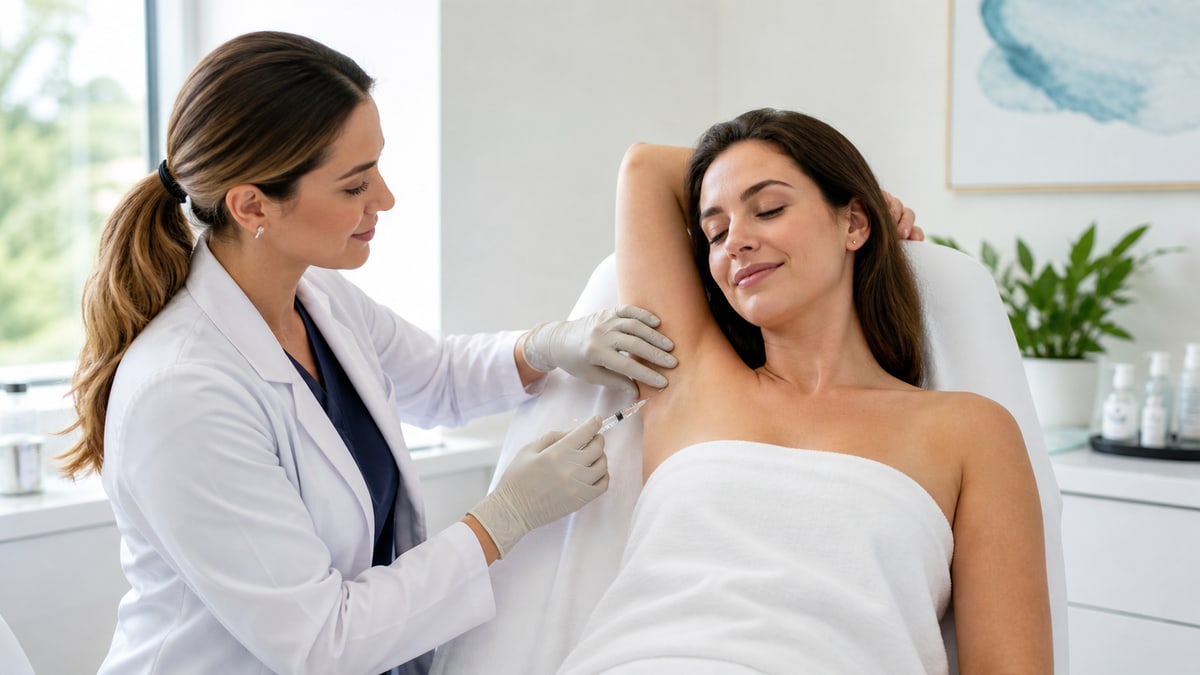
When Hyperhidrosis Starts Running Your Life
If you are looking into Botox for hyperhidrosis, there is a good chance you have already tried to “just deal with it.” You may have changed shirts more times than you wanted to. You may have avoided handshakes, certain fabrics, public speaking, close contact, or anything that made your sweating feel more visible. You may have bought stronger antiperspirants, carried tissues, planned outfits around sweat marks, or quietly hoped no one would notice.
I understand how tiring that can become. Hyperhidrosis is not just “sweating a little more than average.” It can affect your comfort, confidence, clothing, work, school, relationships, and the way you move through ordinary moments. When sweating starts making decisions for you, it is reasonable to look for treatment options.
Botox is one treatment that can help some people with excessive sweating. It is not the right choice for everyone, and it is not usually the first thing people try. But for people whose sweating has not responded well enough to topical treatments, Botox can be a meaningful option to discuss with a dermatologist or other qualified healthcare professional.1
What Is Botox for Hyperhidrosis?
Botox is the brand name for onabotulinumtoxinA, a prescription medication made from a purified form of botulinum toxin. Many people know Botox because it is used cosmetically, but it also has medical uses, including treatment for certain types of excessive sweating.
In the United States, BOTOX is approved to treat severe primary axillary hyperhidrosis, which means severe underarm sweating, when medicines used on the skin do not work well enough in adults.2 Dermatologists may also use botulinum toxin injections for sweating in other areas, such as the hands, feet, or face, but those uses should be discussed carefully because the official safety and effectiveness information is different for areas outside the underarms.3
In plain language, Botox for hyperhidrosis is not about changing your personality, hiding who you are, or chasing perfection. It is about reducing sweat in a specific area so daily life feels more manageable.
How Botox Helps Reduce Sweating
Sweat glands receive signals from nerves. In hyperhidrosis, those sweat glands can act as if they are being told to produce sweat even when your body does not need that much cooling.
Botulinum toxin helps by blocking the nerve signals that activate sweat glands in the treated area.4 When those signals are temporarily interrupted, the treated sweat glands produce much less sweat.
The key word is temporarily. Botox does not permanently remove sweat glands. It does not cure hyperhidrosis. Over time, the effect wears off, and sweating gradually returns. Many people choose repeat treatments when symptoms come back.
Who Botox May Help
Botox may be worth discussing if excessive sweating is interfering with your daily life and simpler treatments have not helped enough. Many people consider it after trying clinical-strength or prescription antiperspirants, especially for underarm sweating.
Botox may be considered when:
- Sweating is frequent, heavy, and hard to control.
- Topical treatments have not worked well enough.
- Sweating affects clothing, work, school, social life, or confidence.
- You want a treatment that targets a specific area.
- You are comfortable with injections or willing to discuss numbing options.
- You understand that results are temporary and repeat treatments may be needed.
A healthcare professional should also consider whether your sweating is primary hyperhidrosis or secondary hyperhidrosis. Secondary hyperhidrosis can happen because of another medical condition, medication, or substance-related cause. The BOTOX prescribing information notes that patients should be evaluated for possible causes of secondary hyperhidrosis, such as hyperthyroidism, so an underlying issue is not missed.5
Areas Botox May Be Used For
Botox is most commonly discussed for underarm sweating, but it may also be used by experienced clinicians for other focal sweating areas. The experience can be different depending on the body part being treated.
| Area | How Botox May Help | Important Notes |
|---|---|---|
| Underarms | Can reduce severe underarm sweating and visible sweat marks. | BOTOX is approved for severe primary axillary hyperhidrosis when topical medicines do not work well enough in adults.2 |
| Hands | May reduce wet palms, slippery grip, damp paper, and difficulty with hand contact. | May cause temporary hand weakness or pain after treatment.6 |
| Feet | May reduce sweaty feet, damp socks, and slipping inside shoes. | Foot injections may be more painful and may be less satisfying for some patients than other treatment areas.6 |
| Face or scalp | May reduce visible facial, forehead, or scalp sweating. | Requires an experienced injector because unwanted spread can affect nearby facial muscles.6 |
If you are considering Botox for an area outside the underarms, it is especially important to ask your clinician about experience, risks, expected benefit, and whether the use is considered off-label.
What Happens During a Botox Appointment?
A Botox appointment for hyperhidrosis is usually done in a medical office. The exact process depends on the area being treated, your clinician’s approach, and your comfort level.
A typical appointment may include:
- A review of your symptoms: Your clinician may ask where you sweat, how long it has been happening, what you have tried, and how it affects your life.
- A check for possible causes: If your sweating is new, widespread, or unusual, your clinician may look for possible underlying causes before treating the sweating itself.
- Mapping the treatment area: For underarms, clinicians may use a staining method such as Minor’s iodine-starch test to show the most active sweating area.7
- Numbing or comfort measures: Depending on the area, your clinician may use topical numbing medication, ice, vibration, or other comfort techniques.4
- Multiple small injections: Botox is injected into the skin in a pattern across the sweating area. For underarms, the recommended dose is 50 Units per axilla, divided across multiple injection sites.7
- Aftercare instructions: Your clinician may give instructions about activity, skin care, and when to expect results.
The idea of multiple injections can sound intimidating. I understand that. But many people find the underarm procedure more manageable than they expected, especially with numbing and a clinician who is used to treating hyperhidrosis.
How Long Does Botox Take to Work?
Botox does not usually stop sweating instantly. Some people notice improvement within a few days, while others need more time.
Mayo Clinic notes that it may take a few days to notice results after botulinum toxin injections for hyperhidrosis.4 The American Academy of Dermatology says most patients notice less sweating within 7 to 10 days after treatment.1 BOTOX prescribing information for primary axillary hyperhidrosis says clinical improvement generally begins within the first two weeks, with maximum clinical benefit around six weeks after injection.7
A realistic timeline may look like this:
- First few days: You may or may not notice a change yet.
- Week 1 to 2: Sweating often begins to decrease.
- Around 6 weeks: Some people may see their strongest benefit around this time.
- Later months: The effect slowly wears off, and sweating may return gradually.
If you do not feel completely dry right away, that does not automatically mean treatment failed. It may simply need more time.
How Long Do Results Last?
Results vary from person to person and by treatment area. Botox is temporary, so repeat treatment is usually needed if you want to maintain the effect.
The American Academy of Dermatology says results tend to last 3 to 10 months for underarms or hands, 3 to 6 months for feet, and about 4.5 months for the face.1 BOTOX information for severe underarm sweating reports that, in one clinical study, the duration of response was 201 days, or about 6.7 months, though individual results vary.8
| Treatment Area | Possible Duration | Notes |
|---|---|---|
| Underarms | Often several months | Some clinical data report around 6 to 7 months of response for severe underarm sweating.8 |
| Hands | Often several months | Repeat treatment may be needed, and temporary weakness is possible.6 |
| Feet | Often shorter than some other areas | May be more painful and less effective for some patients.6 |
| Face | Often several months | Technique matters because nearby facial muscles can be affected.6 |
It can help to think of Botox as a management tool, not a permanent fix. For some people, several months of relief can still be life-changing.
Does Botox for Sweating Hurt?
Pain depends on the area treated and your own sensitivity. Underarm injections are often tolerable, especially with numbing methods. Hand and foot injections can be more uncomfortable because those areas are more sensitive.
Mayo Clinic notes that most people do not feel much pain during botulinum toxin treatment for hyperhidrosis, but numbing options may be used, including topical anesthesia, ice, and vibration anesthesia.4
You can ask about comfort options such as:
- Topical numbing cream
- Ice before or during treatment
- Vibration anesthesia
- Nerve blocks for certain hand or foot treatments
- Taking breaks during the procedure
- Using a very fine needle
If fear of pain is holding you back, say that directly at the appointment. You are not being difficult. Comfort is part of care.
Possible Side Effects and Risks
Botox can be helpful, but it is still a prescription medication and should be treated with care. The safest approach is to see a qualified medical professional who has experience using Botox for hyperhidrosis.
The American Academy of Dermatology lists common side effects of botulinum toxin injections for excessive sweating as pain, bruising, headache, muscle soreness or weakness where injected, and mild itching.1
Possible side effects may include:
- Pain or tenderness at injection sites
- Bruising or bleeding
- Temporary itching
- Headache
- Muscle soreness
- Temporary weakness in the treated area
- Temporary hand weakness when palms are treated
- Temporary facial asymmetry if facial sweating is treated and toxin affects nearby muscles
Serious side effects are uncommon but important to know about. BOTOX safety information warns that botulinum toxin effects can spread from the injection area and cause symptoms such as trouble swallowing, speaking, or breathing, muscle weakness, vision problems, or other serious symptoms. People should seek medical help right away if these occur after treatment.9
Tell your doctor before treatment if you:
- Have a nerve or muscle condition.
- Have had a reaction to any botulinum toxin product before.
- Have breathing or swallowing problems.
- Have bleeding problems.
- Take blood thinners, aspirin-like products, muscle relaxants, sleep medicines, allergy or cold medicines, or injected antibiotics.
- Are pregnant, planning pregnancy, breastfeeding, or planning to breastfeed.
- Have an infection or skin irritation where injections would be placed.
- Have received another botulinum toxin product recently.
This does not mean Botox is unsafe for everyone. It means the decision should be personal, informed, and guided by someone qualified.
Pros and Cons of Botox for Hyperhidrosis
A balanced decision is easier when you can look at both the benefits and the drawbacks without pressure.
| Possible Benefits | Possible Drawbacks |
|---|---|
| Can significantly reduce sweating in the treated area. | Results are temporary and repeat treatments are usually needed. |
| May improve comfort, clothing choices, confidence, and daily functioning. | Requires multiple injections. |
| Does not require surgery. | Can be expensive if insurance does not cover it. |
| Can target one problem area, such as the underarms or palms. | Hands, feet, and face require special care and may have area-specific side effects. |
| Many people notice results within days to a couple of weeks. | There may be bruising, pain, itching, headache, or temporary weakness. |
Botox Compared With Other Treatments
Botox is one option among several. The best treatment depends on where you sweat, how severe it is, what you have already tried, your medical history, and what feels realistic for your life.
| Treatment | Often Used For | Things to Consider |
|---|---|---|
| Clinical-strength or prescription antiperspirants | Underarms, hands, feet | Often tried first; may irritate skin or may not be enough for severe sweating.10 |
| Prescription wipes or topical medications | Often underarms; sometimes other areas depending on medication | Can help some people but may cause side effects such as dry mouth or blurred vision depending on the medicine.1 |
| Iontophoresis | Hands and feet | Can be done at home with a device; requires repeated sessions and maintenance.4 |
| Botox injections | Underarms, hands, feet, face in selected cases | Can be effective for focal sweating; temporary; requires injections and repeat treatment.1 |
| Oral medications | More widespread or severe sweating in some people | May reduce sweating but can cause side effects such as dry mouth, blurred vision, and bladder problems.4 |
| Energy-based underarm treatments | Underarms | Some procedures aim to reduce or destroy underarm sweat glands; suitability varies.1 |
| Surgical options | Severe cases that do not respond to other treatments | Usually considered only after less invasive options have not worked.10 |
Botox may be especially appealing if your sweating is concentrated in one area and you want a non-surgical option. It may be less appealing if you strongly dislike injections, need a permanent treatment, or are concerned about cost.
Cost and Insurance Considerations
Botox for hyperhidrosis can be costly, especially if insurance does not cover it. Coverage varies by plan, country, diagnosis, body area, and documentation.
Some insurance plans may cover Botox for certain medical conditions, including hyperhidrosis, but requirements can vary.11 For underarm hyperhidrosis, insurers may ask for documentation that sweating is severe, that it affects daily life, and that topical treatments have not worked well enough.
Before treatment, ask:
- Is this treatment covered for my diagnosis?
- Does coverage apply only to underarms, or also to hands, feet, face, or scalp?
- Do I need prior authorization?
- Do I need to show that I tried prescription antiperspirants first?
- How many treatments per year are covered?
- What will I owe out of pocket?
- Does the office bill insurance directly?
It can feel frustrating to have to prove that your sweating is “serious enough.” I know that part can feel discouraging. Keeping a simple symptom record may help: dates, areas affected, clothing changes, failed products, and examples of how sweating affects work, school, or daily life.
Questions to Ask Your Doctor
A good appointment should leave you feeling more informed, not pressured. You deserve clear answers before deciding.
Helpful questions include:
- Do my symptoms sound like primary hyperhidrosis or could there be another cause?
- Am I a good candidate for Botox?
- Is Botox approved for the area I want treated, or would this be off-label?
- How many injections would I need?
- What dose do you usually use for this area?
- How do you reduce pain during treatment?
- How soon should I expect results?
- How long do results usually last for your patients?
- What side effects are most likely for this treatment area?
- Could I have temporary weakness, especially if treating my hands?
- What should I avoid before and after treatment?
- What happens if it does not work well enough?
- How much will it cost, and will your office help with insurance authorization?
- What other treatments should I consider first?
The Emotional Side of Choosing Treatment
Deciding to treat hyperhidrosis can bring up mixed feelings. You may feel hopeful, nervous, embarrassed, skeptical, or tired of trying things. All of that is understandable.
I know how easy it is to minimize the problem because other people may not understand it. But excessive sweating can quietly shape your whole day. It can affect how you dress, how close you stand to people, whether you raise your hand, whether you shake someone’s hand, whether you go on a date, and whether you feel comfortable in your own skin.
Wanting treatment does not mean you are vain. It does not mean you are weak. It means you are looking for relief from something that has been taking up too much space in your life.
Botox may or may not be the right treatment for you, but you are allowed to ask about it. You are allowed to want options. You are allowed to want your day to involve fewer calculations about sweat.
A Final Word
Botox can be a helpful treatment for some people with hyperhidrosis, especially severe underarm sweating that has not responded well enough to topical treatments. It works by temporarily blocking nerve signals to sweat glands in the treated area, and results can last for several months.
It is not a cure, and it is not the only option. It involves injections, possible side effects, repeat treatments, and cost considerations. But for some people, the relief is significant enough to make daily life feel lighter.
If hyperhidrosis has been making you feel uncomfortable, limited, or alone, it is reasonable to talk with a dermatologist or qualified healthcare professional. You deserve care that takes this seriously.
Sources
- American Academy of Dermatology Association. “Hyperhidrosis: Diagnosis and treatment.” Discusses botulinum toxin injections for hyperhidrosis, expected timing, duration by treatment area, and common side effects. https://www.aad.org/public/diseases/a-z/hyperhidrosis-treatment
- BOTOX. “BOTOX for Severe Underarm Sweating.” States that BOTOX is injected into the skin to treat symptoms of severe primary axillary hyperhidrosis when topical medicines do not work well enough in people 18 years and older. https://www.botoxseveresweating.com/
- BOTOX Prescribing Information. Notes that BOTOX is indicated for severe primary axillary hyperhidrosis inadequately managed with topical agents and that safety and effectiveness for hyperhidrosis in other body areas have not been established in the labeling. https://www.rxabbvie.com/pdf/botox_pi.pdf
- Mayo Clinic. “Hyperhidrosis: Diagnosis and treatment.” Describes botulinum toxin injections as blocking nerves that trigger sweat glands, discusses numbing options, timing of results, repeat treatments, and possible short-term muscle weakness. https://www.mayoclinic.org/diseases-conditions/hyperhidrosis/diagnosis-treatment/drc-20367173
- BOTOX Prescribing Information. Advises evaluation for potential causes of secondary hyperhidrosis to avoid treating symptoms without diagnosing or treating an underlying condition. https://www.rxabbvie.com/pdf/botox_pi.pdf
- International Hyperhidrosis Society. “OnabotulinumtoxinA Injections (Botox).” Discusses use for palmar, facial, and plantar hyperhidrosis, including effectiveness, repeat treatment, and possible side effects such as temporary hand weakness. https://www.sweathelp.org/hyperhidrosis-treatments/botox.html
- BOTOX Prescribing Information. Gives recommended dosing and administration details for primary axillary hyperhidrosis, including 50 Units per axilla, use of staining techniques such as Minor’s iodine-starch test, and multiple intradermal injection sites. https://www.rxabbvie.com/pdf/botox_pi.pdf
- BOTOX. “BOTOX for Severe Underarm Sweating.” Reports that, in a clinical study, duration of response for severe underarm sweating was 201 days, or 6.7 months, with individual results varying. https://www.botoxseveresweating.com/
- BOTOX. “Important Safety Information.” Describes serious possible side effects, including spread of toxin effects and symptoms requiring urgent medical attention. https://www.botoxseveresweating.com/
- McConaghy JR, Fosselman D. “Hyperhidrosis: Management Options.” American Family Physician, 2018. Summarizes treatment options and notes that botulinum toxin injections may be considered first- or second-line therapy for several types of primary focal hyperhidrosis. https://www.aafp.org/pubs/afp/issues/2018/0601/p729.html
- Mayo Clinic. “Botox injections: Care at Mayo Clinic.” Notes that many insurance companies cover Botox injections for certain medical conditions, including hyperhidrosis. https://www.mayoclinic.org/tests-procedures/botox/care-at-mayo-clinic/pcc-20384660